How to Use the Archive كيفية استخدام الأرشيف
Welcome to the Palestinian Folk Music Archive — a growing collection of folk songs preserved through shared recordings and collective memory. Here’s how to find, listen to, and contribute to the collection.
مرحبًا بكم في أرشيف الموسيقى الشعبية الفلسطينية — مجموعة متنامية من الأغاني الشعبية التي يتم الحفاظ عليها من خلال التسجيلات المشتركة والذاكرة الجماعية. إليكم كيفية البحث في المجموعة، والاستماع إلى الأغاني، والمساهمة فيها.
But first, what sets this archive apart from all the other exciting projects popping up? On this site, you will find two different types of archives:
لكن أولًا، ما الذي يميز هذا الأرشيف عن جميع المشاريع الأخرى المثيرة التي تظهر من حولنا؟ ستجدون في هذا الموقع نوعين مختلفين من الأرشيفات:
- The Main Archive / الأرشيف الرئيسي
- The Community Based Archive / الأرشيف المجتمعي
The Main Archive
الأرشيف الرئيسي
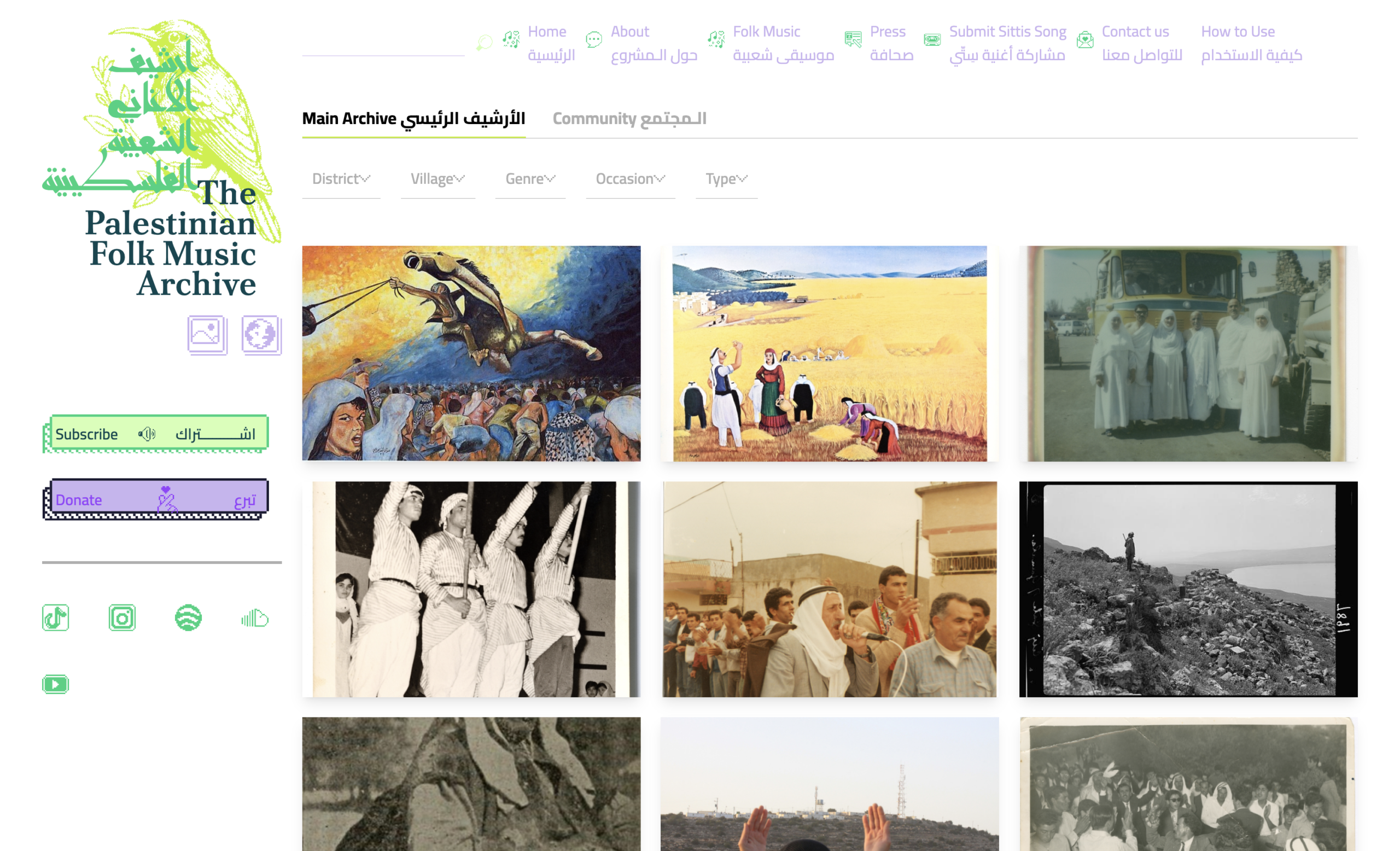
This part of the archive has been in the works since 2013, when Serena published “Collection of Folkloric Palestinian Songs: In Accordance with the Traditions of the Town of Al-Bireh” for the Al-Bireh Convention in Washington, D.C. What you see here grew out of that: years of research, data collection, and careful cataloguing.
يعود العمل على هذا الجزء من الأرشيف إلى عام 2013، عندما نشرت سيرينا كتاب «مجموعة من الأغاني الفولكلورية الفلسطينية: وفقًا لتقاليد مدينة البيرة» بمناسبة مؤتمر البيرة في واشنطن العاصمة. وما ترونه هنا هو امتداد لذلك العمل: سنوات من البحث، وجمع البيانات، والتوثيق والتصنيف الدقيق.
This is by no means a complete collection of our folk songs, and honestly, no such thing could ever exist. Our songs shift from place to place, and singers often reshape the words and melodies per their own circumstances or emotional state (in classic Arabic music studies, this is called taqasim or improvisation). So think of this as a “living” archive: something meant to guide and inspire you, not to hand down one fixed, correct version. (Much more on this to come.)
وهذه بالتأكيد ليست مجموعة كاملة من أغانينا الشعبية، وبصراحة، لا يمكن لمثل هذه المجموعة الكاملة أن توجد أصلًا. فأغانينا تختلف من مكان إلى آخر، وغالبًا ما يعيد المغنون تشكيل الكلمات والألحان وفقًا لظروفهم الخاصة أو حالتهم العاطفية (ويُعرف هذا في دراسات الموسيقى العربية الكلاسيكية باسم التقسيم أو الارتجال). لذلك، يمكنكم التفكير في هذا الأرشيف باعتباره أرشيفًا «حيًا»: شيئًا يهدف إلى إرشادكم وإلهامكم، وليس إلى تقديم نسخة واحدة ثابتة وصحيحة باعتبارها النسخة النهائية. (وسنتحدث عن هذا بتفصيل أكبر لاحقًا.)
Despite these differences, every song here has been cross referenced across a variety of sources and transcribed, transliterated, and translated by hand, with each step checked and re-checked by real people. Where a word or idea doesn’t cross neatly from Arabic into English, we’ve taken small liberties to keep the meaning true.
ورغم هذه الاختلافات، تمت مقارنة كل أغنية هنا مع مجموعة متنوعة من المصادر، كما جرى تفريغها وكتابتها صوتيًا بالحروف اللاتينية وترجمتها يدويًا، مع مراجعة كل خطوة والتحقق منها مرارًا على يد أشخاص حقيقيين. وعندما لا يمكن نقل كلمة أو فكرة من العربية إلى الإنجليزية بشكل دقيق، اتخذنا بعض الحريات البسيطة للحفاظ على المعنى الأصلي.
We’ve also indexed each song in detail: by location (region, city, town, or village, wherever we could trace it), and by occasion, genre, and even the plants and animals that appear in the lyrics. It’s slow, painstaking work, but it matters. For Palestinians living in exile, we wanted these songs to be more than words on a page in Arabic. Whether or not you read Arabic fluently, you can follow the lyrics through transliteration and understand what they’re really saying.
كما قمنا بفهرسة كل أغنية بالتفصيل بحسب موقعها (المنطقة أو المدينة أو البلدة أو القرية، حيثما أمكننا تتبع أصلها)، وبحسب المناسبة والنوع، وحتى النباتات والحيوانات التي تظهر في كلماتها. إنه عمل بطيء وشاق، لكنه مهم. وبالنسبة للفلسطينيين الذين يعيشون في المنفى، أردنا أن تكون هذه الأغاني أكثر من مجرد كلمات على صفحة باللغة العربية. وسواء كنت تقرأ العربية بطلاقة أم لا، يمكنك متابعة الكلمات من خلال الكتابة الصوتية بالحروف اللاتينية وفهم ما تقوله الأغنية فعلًا.
The Community Archive
الأرشيف المجتمعي
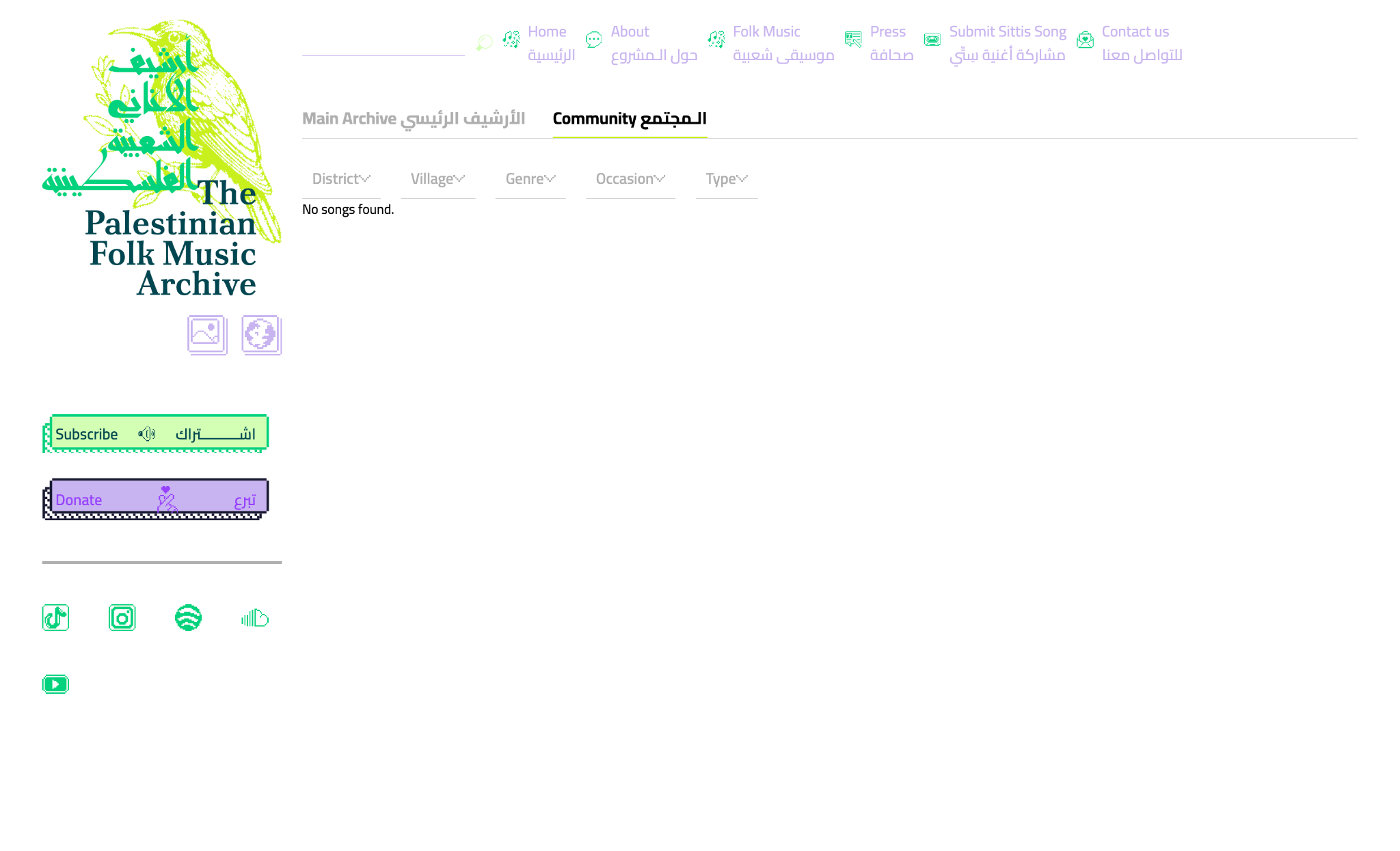
The second part of this archive is FOR the community, and it might be the most exciting of all. These songs belong to no one and to everyone at once. So we wanted to make sure the community could do more than use the archive to remember the songs of our ancestors, but actually take part in building it.
الجزء الثاني من هذا الأرشيف هو للمجتمع، وقد يكون أكثر أجزائه إثارة. فهذه الأغاني لا يملكها شخص واحد، وفي الوقت نفسه هي ملك للجميع. لذلك أردنا أن نضمن أن يتمكن المجتمع من أكثر من مجرد استخدام الأرشيف لتذكر أغاني أجدادنا، بل أن يشارك فعليًا في بنائه.
The community archive is whatever we, the community, make it. Under the “Submit Sitti’s Song” tab, any Palestinian anywhere in the world can share a song from their Sitti (or their aunt, mom, uncle, siddo, and so on). You can contribute the lyrics alone, or go further and upload audio of your sitti singing it herself, live or recorded. And if you’re feeling brave, you can even submit a video. The whole point is to create a space where our sittis’ voices can be heard, and kept, for good. We will not be erased.
الأرشيف المجتمعي هو ما نصنعه نحن، أي المجتمع. ومن خلال تبويب «Submit Sitti’s Song»، يمكن لأي فلسطيني في أي مكان في العالم مشاركة أغنية من ستّه (أو خالته، أو أمه، أو عمه، أو جدّه، وغيرهم). يمكنك المساهمة بالكلمات وحدها، أو الذهاب إلى أبعد من ذلك ورفع تسجيل صوتي لستّك وهي تغنيها بنفسها، سواء كان التسجيل مباشرًا أو مسجلًا مسبقًا. وإذا كنت تشعر بالجرأة، يمكنك حتى إرسال مقطع فيديو. الفكرة الأساسية هي إنشاء مساحة يمكن فيها سماع أصوات ستّاتنا والحفاظ عليها إلى الأبد. لن نُمحى.
One thing to keep in mind: because this is the community side of the project, these songs won’t go through the same level of scrutiny and analysis of the Main Archive. Instead, each submission gets a standard review to confirm two things: 1) that it’s part of the Palestinian folk musico-poetic tradition, and 2) that it meets our own internal standards (the use of inappropriate language, identifying or disparaging information, etc). We reserve the right not to publish or retract any lyrics, audio, or video we find inappropriate or unsuitable. Please read our submission guidelines.
هناك أمر واحد يجب أخذه بعين الاعتبار: نظرًا لأن هذا هو الجانب المجتمعي من المشروع، فلن تخضع هذه الأغاني لنفس مستوى التدقيق والتحليل الذي يخضع له الأرشيف الرئيسي. وبدلًا من ذلك، تخضع كل مساهمة لمراجعة عادية للتأكد من أمرين: 1) أنها جزء من التقليد الشعبي الموسيقي والشعري الفلسطيني، و2) أنها تتوافق مع معاييرنا الداخلية (مثل استخدام لغة غير لائقة، أو معلومات تكشف هوية أشخاص أو تنتقص منهم، وغير ذلك). نحتفظ بالحق في عدم نشر أو سحب أي كلمات أو تسجيلات صوتية أو مقاطع فيديو نراها غير مناسبة أو غير ملائمة. يرجى قراءة إرشادات المساهمة.
Browsing the Collection
تصفح المجموعة
1) Open the Folk Music tab from the main menu along the top of the page.
1) افتح تبويب الموسيقى الشعبية من القائمة الرئيسية الموجودة في أعلى الصفحة.

2) Select the Collection you would like to search through: Main Archive or Community Archive.
2) اختر المجموعة التي ترغب في البحث فيها: الأرشيف الرئيسي أو الأرشيف المجتمعي.
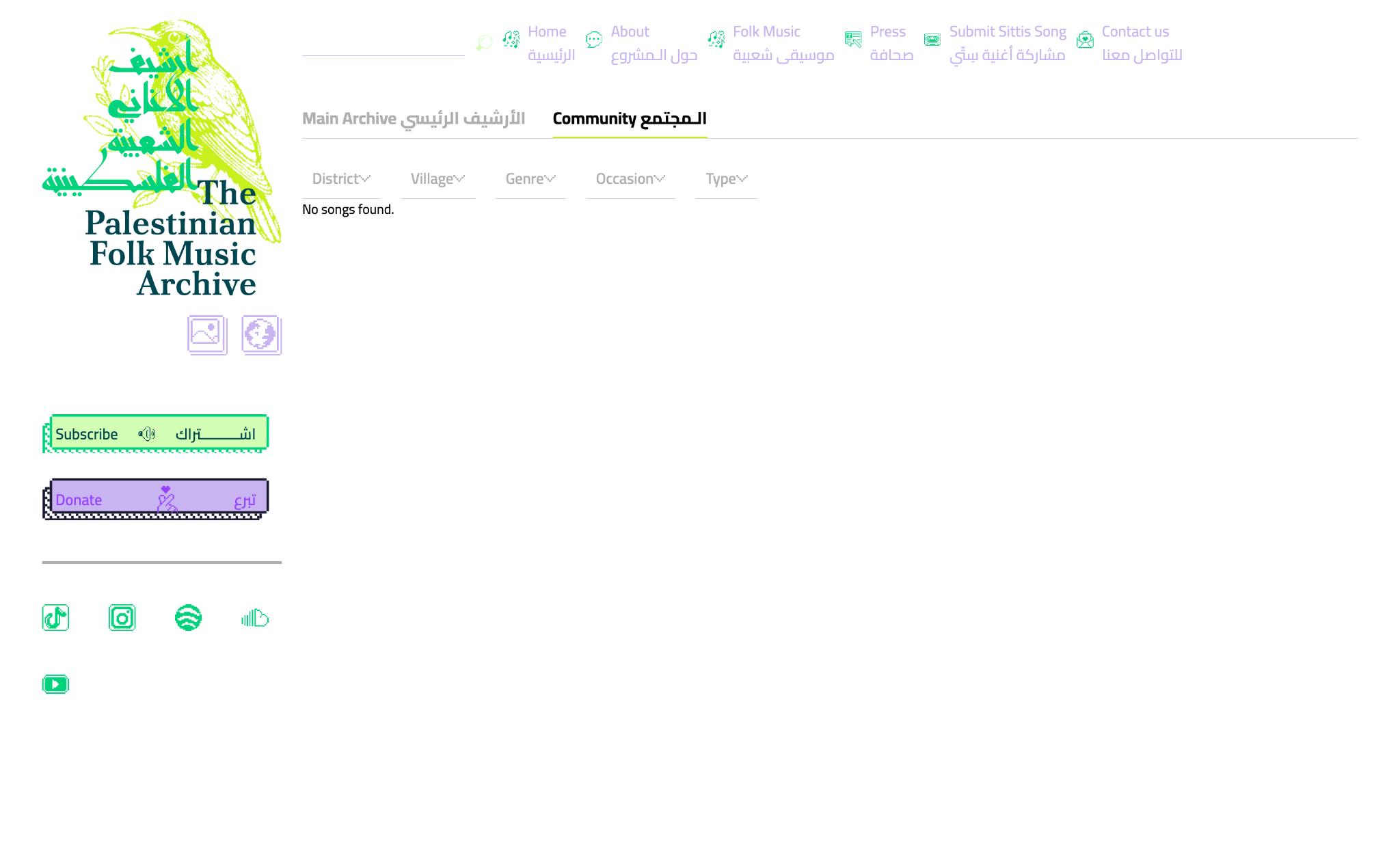
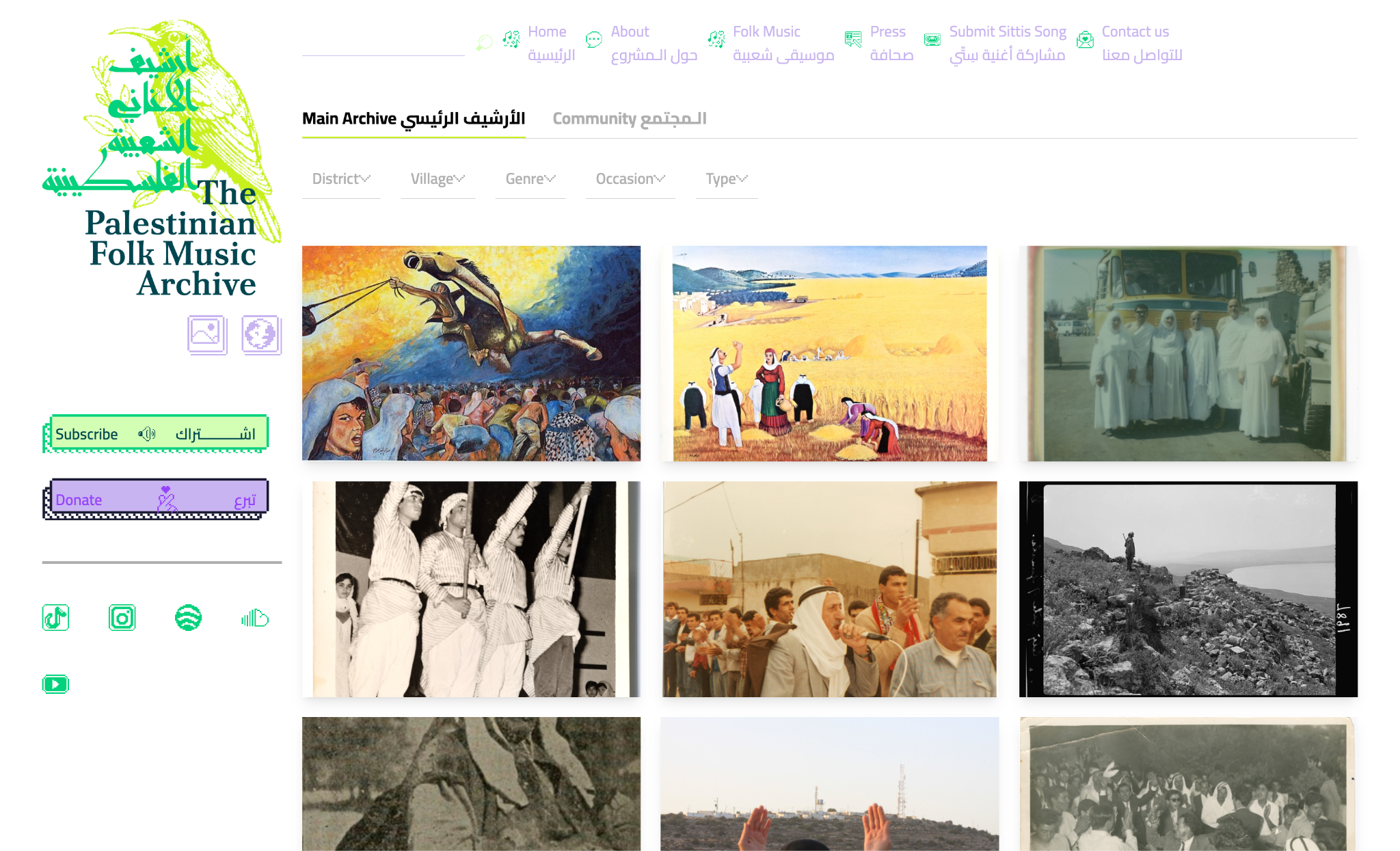
If you click on Main Archive, you will be taken to a map of Palestine where you can select regions, cities, or villages to find songs from those areas. However, if you want to see the full list, you can click on the icon directly underneath the logo.
إذا ضغطت على الأرشيف الرئيسي، ستنتقل إلى خريطة لفلسطين يمكنك من خلالها اختيار المناطق أو المدن أو القرى للعثور على الأغاني من تلك المناطق. أما إذا كنت تريد رؤية القائمة الكاملة، فيمكنك الضغط على الأيقونة الموجودة مباشرة أسفل الشعار.
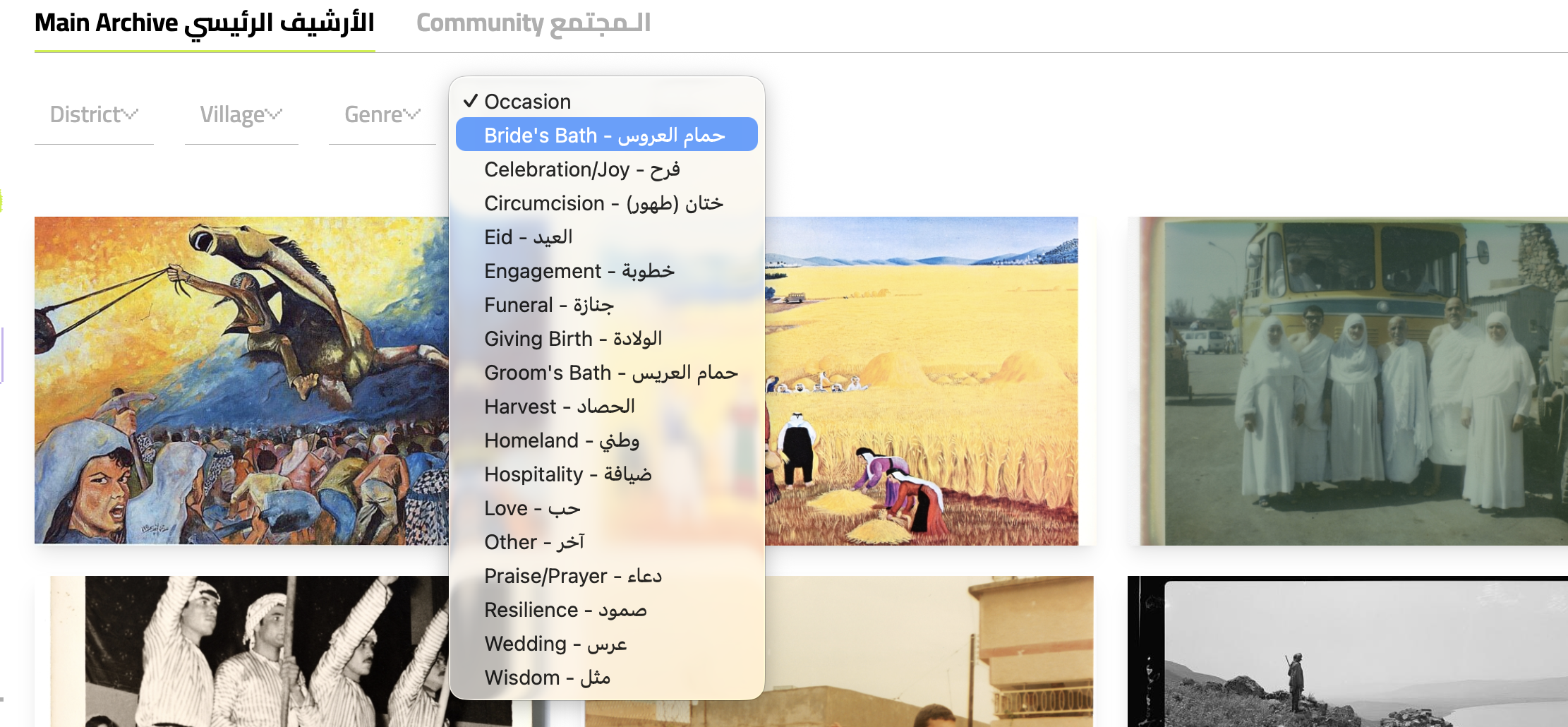
You can scroll through the full list or narrow it down using filters such as region, theme (weddings, harvest, lullabies), or the occasion the song was traditionally performed for.
يمكنك تصفح القائمة الكاملة أو تضييق نطاق النتائج باستخدام الفلاتر مثل المنطقة، والموضوع (الأعراس، والحصاد، والتهويدات)، أو المناسبة التي كانت الأغنية تُؤدى فيها تقليديًا.
Searching for a Specific Song
البحث عن أغنية محددة
Use the search bar to look up a song by its title, lyrics, place, plant or animal! Type a keyword in Arabic or English and press the search button.
استخدم شريط البحث للعثور على أغنية من خلال عنوانها، أو كلماتها، أو مكانها، أو نبات أو حيوان مذكور فيها! اكتب كلمة مفتاحية باللغة العربية أو الإنجليزية ثم اضغط على زر البحث.

Listening to a Recording
الاستماع إلى تسجيل
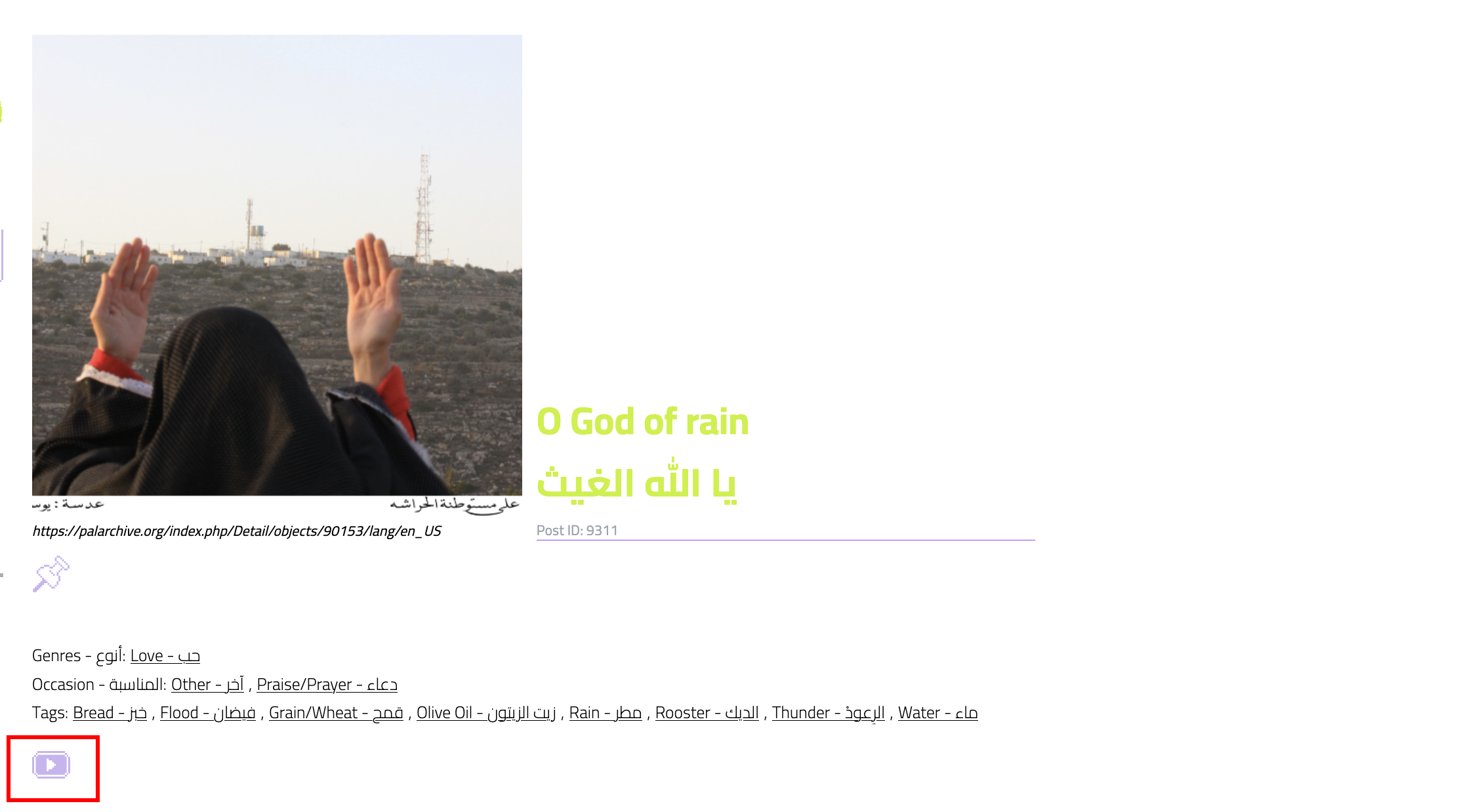
Select any song to open its page, initially this page will be lyrics focused. Over time recordings will be added, if one is available now, press [play] to listen. Each entry includes the Arabic lyrics, an Arabic to English transliteration, and any interesting or historical notes about the song where available.
اختر أي أغنية لفتح صفحتها، حيث تركز الصفحة في البداية على كلمات الأغنية. ومع مرور الوقت ستتم إضافة التسجيلات، وإذا كان هناك تسجيل متاح حاليًا، اضغط على [تشغيل] للاستماع إليه. يتضمن كل إدخال الكلمات العربية، وكتابة صوتية من العربية إلى الإنجليزية بالحروف اللاتينية، وأي ملاحظات مثيرة للاهتمام أو تاريخية حول الأغنية متى توفرت.
Contributing a Recording
المساهمة بتسجيل
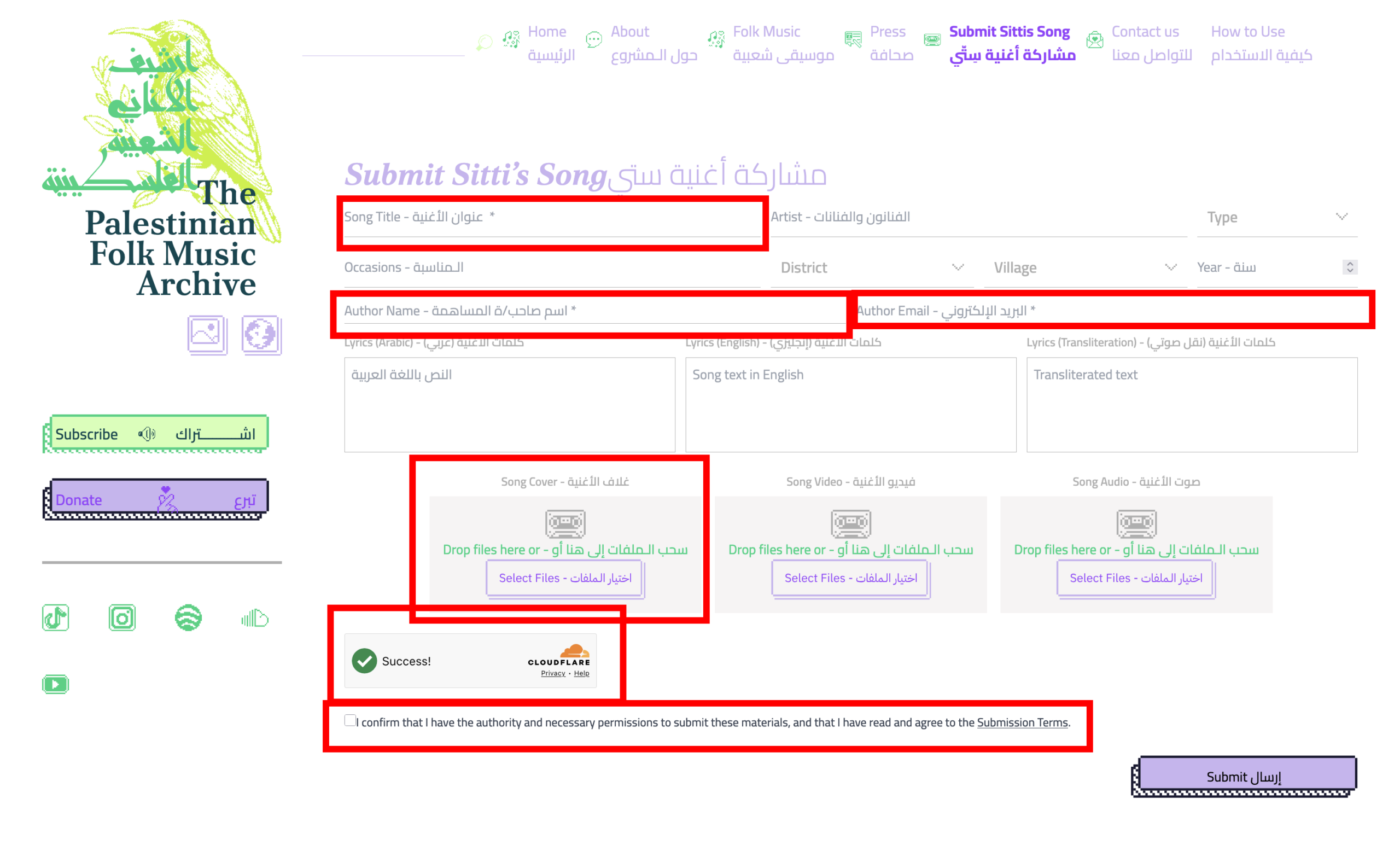
This archive grows through the community. If you have a folk song, a memory, or a recording to share, go to “Submit Sitti’s Song” and follow the form to upload your audio with “*” fields indicated as mandatory to upload. Then accept the Terms and conditions and hit submit.
ينمو هذا الأرشيف من خلال المجتمع. إذا كانت لديك أغنية شعبية، أو ذكرى، أو تسجيل ترغب في مشاركته، فتوجه إلى «Submit Sitti’s Song» واتبع النموذج لرفع التسجيل الصوتي، مع تعبئة الحقول التي تحمل علامة «*» باعتبارها حقولًا إلزامية. ثم وافق على الشروط والأحكام واضغط على إرسال.
We will publish them as soon as we can, but please give us 2-3 weeks for processing and review.
سنقوم بنشر المساهمات في أقرب وقت ممكن، ولكن يُرجى منحنا من أسبوعين إلى ثلاثة أسابيع لمعالجة المساهمات ومراجعتها.
Every contribution helps preserve songs that might otherwise be lost.
كل مساهمة تساعد في الحفاظ على أغانٍ قد تضيع لولا ذلك.
Tips
نصائح
Songs may appear under different names across regions, so try a few spellings if your first search comes up empty.
قد تظهر الأغاني بأسماء مختلفة من منطقة إلى أخرى، لذلك جرّب عدة طرق لكتابة الاسم إذا لم تظهر نتائج في بحثك الأول.